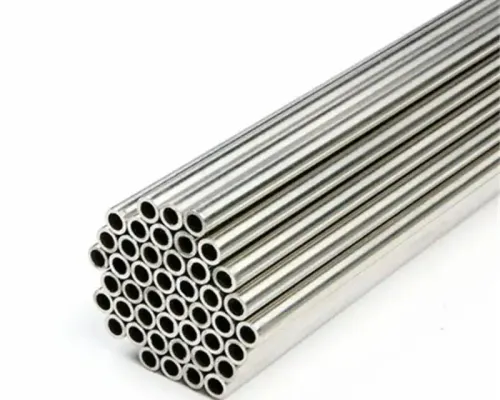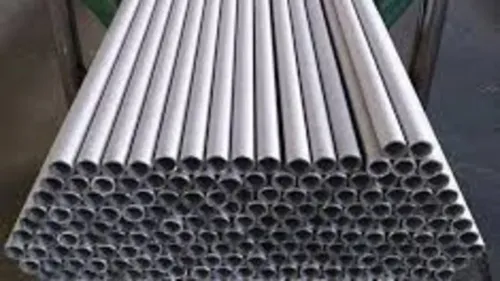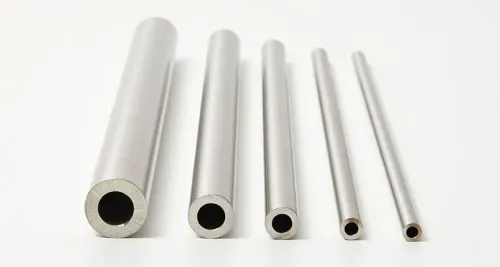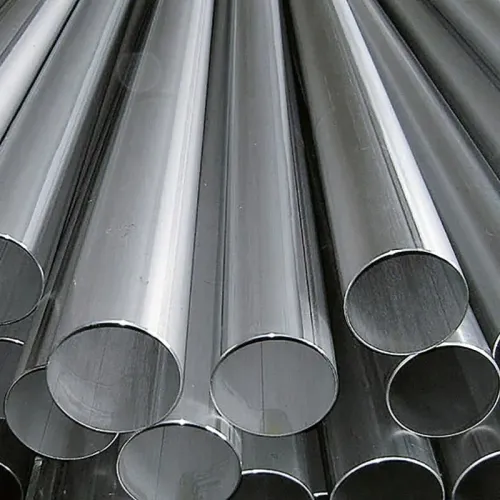

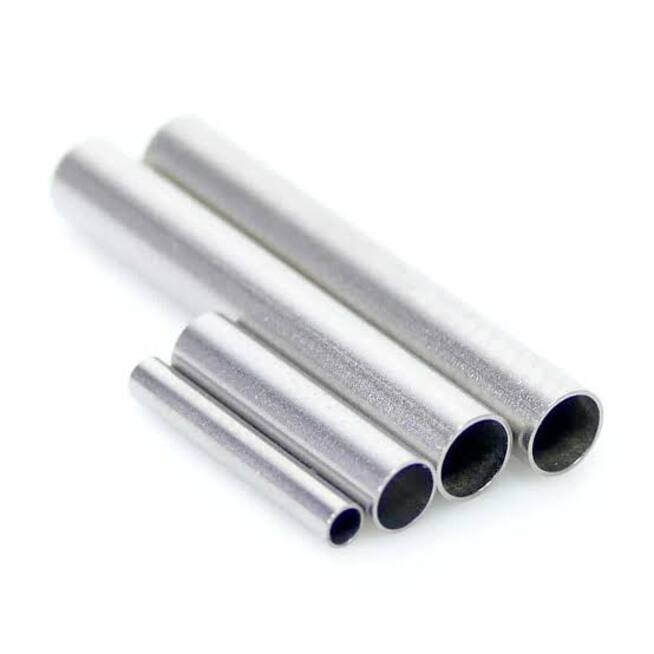
A small-bore impulse line can distort a pressure reading through trapped gas, condensed liquid, leaks, vibration, or excessive transport delay even when the transmitter is accurate. You will be able to judge when 316L seamless tubing is justified, specify it correctly, and route and support it for liquid, gas, and steam measurement.
Key takeaways
- Use a continuous, clean pressure boundary to preserve accurate readings.
- Choose 316L over 304L for chloride exposure, but check temperature and chemical limits.
- Specify tubing, fittings, surface finish, testing, and traceability together.
- Protect installed impulse lines against freezing, vibration, corrosion, and slow response.
How an impulse tube transfers pressure without corrupting the reading
A pressure tap admits process fluid into the impulse line, and the trapped fluid transmits pressure to the transmitter or gauge through a continuous pressure boundary.
The instrument reads the pressure at its connection, not automatically the pressure at the tap: elevation creates hydrostatic error, while a narrow or long bore increases friction, plugging risk, and response delay.
A seamless tube for process control connects to the tapping valve, manifold, and instrument through correctly sized compression fittings. The fitting grips the tube mechanically and seals on its outside diameter; the tube’s seamless construction does not establish the pressure rating.
Check the tube wall, allowable stress at temperature, fitting rating, and the weakest valve or manifold interface.
- Install the root valve at the tapping point, then use a manifold with isolation, equalizing, and bleed functions where the instrument requires calibration or removal.
- Route liquid lines continuously downward from the tap to an instrument mounted below the tap, preventing gas pockets that make readings unstable.
- Route gas lines continuously upward from the tap to an instrument above it, allowing condensate to drain back instead of collecting at low points.
- Support the tube against vibration, avoid sharp bends and unsupported fitting loads, and keep the run short without creating pockets or kinks.
Seal every connection, keep the bore clean, and account for elevation when configuring the transmitter. Tube material alone does not determine response time or measurement accuracy.
Why 316L outperforms 304L—and where it still fails
Molybdenum gives 316L its main advantage over 304L: ASTM 316L contains 2.0–3.0% molybdenum, compared with none in 304L. That addition improves resistance to chloride pitting and crevice corrosion from brine, coastal moisture, and many chemical solutions. The stainless steel impulse tube benefits also include better durability through repeated wetting and drying than carbon-steel tubing.
It is not immune; stagnant lines, threaded crevices, deposits, and contaminated insulation can still initiate attack.
| Material | Advantage in impulse service | Important limitation |
|---|---|---|
| 304L | Lower-cost general corrosion resistance | More vulnerable to chloride pitting and crevice corrosion |
| 316 | Molybdenum-based chloride resistance | Higher carbon limit can reduce weld-area corrosion resistance after heating |
| 316L | 316-level molybdenum resistance plus carbon limited to 0.030% | Low carbon does not prevent all localized corrosion or chemical attack |
316L is not dramatically more corrosion-resistant than standard 316 in an unwelded tube; its meaningful distinction is reduced sensitization risk in welded or heat-affected areas. Choose a 316L impulse tube when chloride exposure, hygienic service, or chemically demanding conditions exceed 304L’s margin.
Select another material when the process exceeds 316L’s chemistry or temperature envelope. Six-moly stainless steel or duplex stainless steel provides a stronger chloride-resistance option; nickel alloys suit strongly reducing or acidic media.
PTFE-lined tubing is safer for selected aggressive chemicals, while abrasive slurry, hydrogen-related service, or severe temperatures require a dedicated materials review rather than an automatic 316L selection.
Seamless versus welded tubing: what affects instrument reliability
When assessing 316L SS seamless impulse tubes for benefits in severe service, eliminating the longitudinal weld removes one potential weak point, crevice, or inspection concern. That advantage matters for cyclic pressure, corrosive condensate, demanding cleanliness, or a consequence-heavy leak.
Qualified welded tubing remains a sound choice when its weld, dimensions, surface, and tests meet the service specification.
| Option | Reliability implication | Best fit |
|---|---|---|
| Seamless | No longitudinal weld; wall and ovality still require control | Severe cycling, corrosive or cleanliness-critical service |
| Qualified welded | Consistent dimensions and finish at lower cost or shorter lead time | Routine service with documented weld quality and testing |
| Either construction | Installation determines leak and fatigue risk | Applications with controlled fitting assembly and support |
A seamless label cannot compensate for excessive bending, ovalization, scratches, unsupported spans, or vibration. Match the tube’s hardness, wall range, outside diameter, bend radius, and installation method to the compression-fitting manufacturer; over-tightening or incorrect reassembly can leak either construction.
Quality checks that carry more weight than the label include:
- Heat-number traceability and positive material identification where corrosion risk justifies it
- Outside diameter, wall-thickness, ovality, visual condition, and internal cleanliness checks
- The specified hydrostatic or nondestructive examination, recorded against ASTM A269 requirements
- Cleaning and passivation controls addressing oil, chips, free iron, and drawing residue; ASTM A380 and ASTM A967 provide recognised frameworks
A mill certificate alone does not prove every installed length is 316L. Verify the material and inspect the finished installation.
How to specify the tube, fittings, finish, and inspection plan
Put the design pressure, temperature, dimensions, standards, material condition, connection method, finish, and inspection records directly into the purchase specification. “316L impulse tube” alone leaves too many failure points open.
| Specification item | Put in the purchase order | Why it matters |
|---|---|---|
| Outside diameter and wall | Exact OD, wall thickness, length, tolerance, and allowable ovality | Pressure capacity and ferrule grip depend on dimensions |
| Material and standard | 316L, ASTM A269, heat-number traceability, and ASME B31.3 design basis | ASTM A269 controls tube manufacture; ASME B31.3 controls design and testing |
| Material condition | Solution-annealed or another named condition, with hardness limits where required | Cold-worked tube can resist bending and sealing |
| Surface finish | Pickled, bright-annealed, or mechanically polished; state a maximum Ra for high-purity service | Rough or contaminated surfaces trap process residue |
| Connections | Tube OD matched to the fitting, double-ferrule compression fittings, valve or manifold interfaces, thread form, and pressure rating | The connection often governs the pressure boundary |
| Inspection | Hydrostatic or specified nondestructive examination, dimensional report, visual report, mill certificate, and PMI record | A generic certificate cannot prove every length is the ordered alloy |
State design pressure, temperature, cyclic service, chloride concentration, insulation exposure, and any stagnant zones. Size the seamless tube for process control against the allowable stress at temperature, then verify that every fitting and manifold exceeds the same design condition.
Rajveer Metals can be asked for heat-number traceability and PMI documentation alongside its 316L supply, rather than accepting a certificate of conformity alone. Record each installed length against its heat number.
Related products
 | Stainless Steel Seamless Tube Stainless steel 316L impluse tube Rajveer metals is one of the renowned exporter, manufacturer, stockist, supplier and stock holder of a qualitative range of Stainless Steel 316L... |
 | Stainless Steel Seamless Tube Stainless steel impluse tube Stainless steel (SS) impulse tubing serves as the critical communication channel in process industries, connecting process pipelines to field... |
How to prevent freezing, vibration, corrosion, and delayed response after installation
Keep liquid-filled impulse lines above the process fluid’s freezing point; a frozen plug isolates the transmitter and can rupture the tube when pressure returns. Use insulation, heat tracing with controlled temperature, and a continuous slope toward the process connection. Avoid low points where condensate can collect.
1. Match protection to the process phase. Keep gas lines sloped to drain condensate back to the tapping point, while liquid lines slope toward the transmitter or a designed drain. Install separators, condensate pots, or purge arrangements when wet gas or flashing service is expected.
2. Control pulsation before it reaches the tube. A snubber, restrictor, or properly sized manifold reduces rapid pressure cycling, but excessive restriction creates delayed response. Confirm the instrument’s response requirement after adjustment.
3. Support the line close to fittings, valves, and direction changes. Eliminate unsupported spans, sharp bends, ovalization, and tube contact with vibrating equipment. Use the fitting maker’s permitted wall range, hardness, bend radius, and assembly torque.
4. Allow thermal movement with a formed offset or expansion loop; do not force a hot line into alignment with a cold transmitter. Anchors and guides must restrain vibration without blocking calculated expansion.
5. Inspect the outside surface after installation. Remove chloride-bearing deposits, repair damaged insulation, and prevent water from entering jacketed sections. 316L still pits in stagnant crevices and under contaminated insulation, especially during evaporation.
Use 316L SS seamless impulse tubes for benefits such as avoiding a longitudinal weld discontinuity, but do not treat seamless construction as a pressure rating. Verify the weakest fitting, manifold, and valve connection. These stainless steel impulse tube benefits disappear when corrosion, vibration, or poor routing delays pressure transmission.
Frequently asked questions
How does an impulse tube transfer pressure without corrupting the reading?
A pressure tap admits process fluid into a sealed impulse line, and the trapped fluid transmits pressure to the transmitter or gauge. Correct routing, cleanliness, leak-tight fittings, and appropriate tube diameter prevent air, liquid, blockage, and temperature effects from distorting the reading.
Why does 316L outperform 304L in impulse tube service?
316L contains molybdenum, which improves resistance to chloride pitting and crevice corrosion compared with 304L. It still fails when the process chemistry, temperature, stagnant deposits, or mechanical damage exceeds the alloy’s resistance.
Is seamless tubing more reliable than welded tubing for process control?
Seamless tubing removes the longitudinal weld from the pressure boundary, while welded tubing can perform reliably when its weld quality, dimensions, heat treatment, and inspection meet the service requirements. Reliability depends on manufacturing quality, installation, fittings, and operating conditions.
What should you specify for a 316L impulse tube installation?
Specify tube outside diameter, wall thickness, 316L material standard, seamless or welded construction, annealed condition, surface finish, end preparation, fitting material, pressure and temperature ratings, pressure testing, cleanliness, dimensional checks, and material traceability.