
An order for stainless steel seamless tubes involves more than choosing a grade and diameter: the manufacturing route, dimensions, service conditions, testing, documentation, and delivery condition all affect whether the tube fits your job. By following the process from billet preparation through receiving inspection, you can write a quotation request that suppliers can price accurately and your team can verify on arrival.
Key takeaways
- Specify outside diameter, wall thickness, length, grade, finish, and quantity.
- Match the tube grade and standard to pressure, temperature, corrosion, and fabrication demands.
- Compare seamless and welded tubes by service risk, tolerances, availability, and cost.
- Check dimensions, markings, surface condition, quantity, and certificates on delivery.
What an SS Seamless Tube Is and How It Is Made
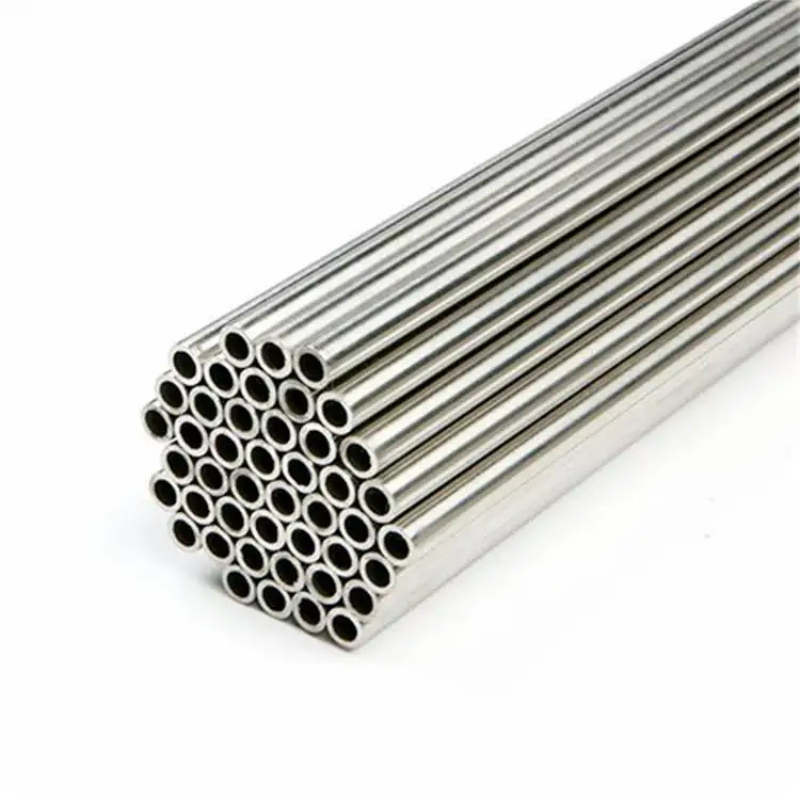
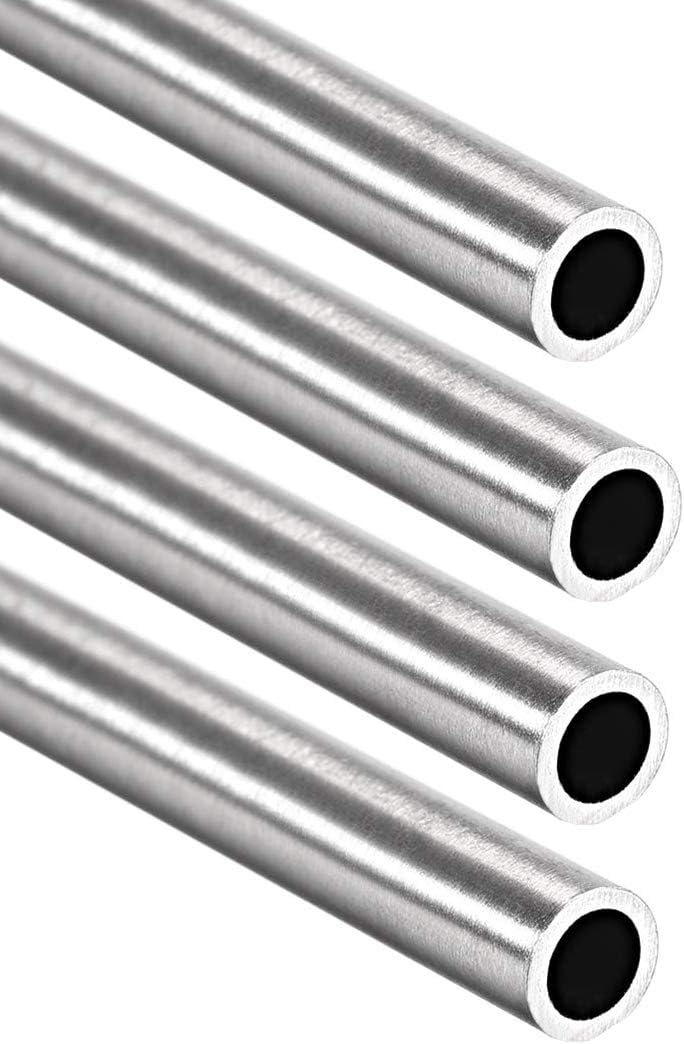
A seamless tube has no longitudinal weld joining its walls. What are SS seamless tubes? They are hollow stainless steel products formed from solid round billet, unlike welded tubes made by bending strip or sheet and joining the edges.
SS seamless tubes explained in one line: the tube wall is continuous around the circumference, but that does not mean perfect wall thickness or freedom from defects.
The SS seamless tube manufacturing steps usually follow this sequence:
- Inspect and heat the stainless steel billet to the required piercing temperature.
- Rotary-pierce the billet to create a hollow shell.
- Elongate, reduce, and size the shell to approach the specified outside diameter and wall thickness.
- Cold-draw or cold-pilger the tube when tighter dimensions, smaller sizes, or improved surface finish are needed.
- Anneal or solution anneal the tube to restore suitable structure and ductility.
- Straighten, condition the surface, and remove visible imperfections.
- Cut random or fixed lengths and prepare the ends.
- Perform dimensional checks and specified eddy-current or ultrasonic testing, then mark the tube with grade, size, heat number, or standard information.
Before delivery, the tube may be pickled, bright annealed, polished, or supplied in another stated condition. Confirm the grade, outside diameter, wall thickness, length, finish, end preparation, heat treatment, and tests; “stainless seamless tube” alone does not define the item.
Tube dimensions use actual outside diameter and wall thickness, while pipe commonly uses nominal size and schedule.
How to Specify the Tube Before Requesting a Quote
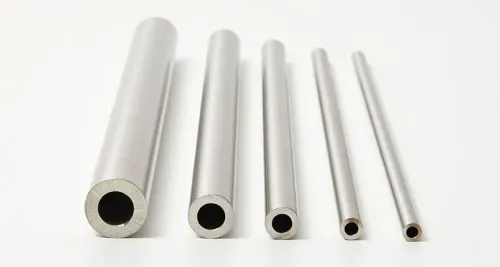
State the actual outside diameter and wall thickness, not only a nominal pipe size. Tubing is commonly quoted by OD and wall; pipe uses nominal size and schedule under ASME B36.19M. Include inside diameter when flow area or a mating insert controls the design.
Give the supplier a complete specification:
- Grade and standard, such as ASTM A269/A269M, A213/A213M, or A312/A312M.
- OD, wall thickness or ID, quantity, and whether you need random lengths or fixed lengths with allowable variation.
- Condition: hot finished or cold worked; annealed or solution annealed; pickled, bright annealed, or mechanically polished.
- Straightness, surface-finish limit, inspection or pressure-testing requirements, and heat-number traceability.
- End preparation and the connection method. A plain square cut for compression fittings is not the same item as a bevel for welding or a threaded end.
| Connection detail | Write in the inquiry | Why it changes the quote |
|---|---|---|
| Plain end | Square-cut or deburred; tolerance if critical | Suits cutting, compression fittings, or orbital welding |
| Weld end | Bevel angle, root face, and protective cap requirement | Controls preparation and fit-up at the joint |
| Threaded end | Thread type, size, pitch, length, and male or female form | Prevents an incompatible connection |
| Formed end | Flared, swaged, grooved, or U-bent, with drawing | Requires fabrication beyond straight tube |
Ask how stainless steel seamless tubes are supplied: strapped bundles or individual protection, with tags showing grade, size, standard, heat number, and quantity. Specify protection from carbon-steel slings and iron-bearing debris before delivery.
How Grade, Service, and Standards Determine the Right Tube
Grade choice starts with the fluid, not the word seamless. For readers searching “ss seamless tubes explained,” the key distinction is that 304 suits many general industrial services, while 316 adds molybdenum for better resistance to chlorides and pitting. 316L contains less carbon than 316, reducing carbide precipitation after welding; it is not automatically stronger.
| Grade | Main advantage | Watch point |
|---|---|---|
| 304 | General corrosion resistance and broad availability | Weaker choice for chloride-rich, marine, or saline service |
| 316 | Improved pitting and crevice-corrosion resistance | Higher cost does not replace correct wall design |
| 316L | Lower carbon for welded assemblies and repeated heat exposure | Confirm the required strength and temperature limits |
Pressure selection depends on outside diameter, wall thickness, temperature, allowable stress, corrosion allowance, and the governing design code. A seamless tube is not automatically suitable for high pressure or high temperature.
Select ASTM A269/A269M for general-service austenitic tubing, ASTM A213/A213M for boiler, superheater, and heat-exchanger tubing, or ASTM A312/A312M for specified corrosive or high-temperature pipe service.
Identify the service before requesting a quote:
- State the fluid, concentration, contaminants, pressure, temperature, flow, and whether cycling or vacuum occurs.
- Specify the application, such as heat exchanger, instrumentation, process line, or structural use.
- Require the applicable standard edition, heat treatment, dimensions, and tests, including hydrostatic, eddy-current, ultrasonic, hardness, or positive material identification when required.
A certificate saying “equivalent” is insufficient without chemistry, mechanical limits, and written approval for your application.
How Seamless and Welded Tubes Compare at the Point of Purchase
Seamless construction justifies its higher cost when the tube faces high internal pressure, cyclic loading, severe forming, or a service where a longitudinal weld is unacceptable. Removing the weld zone removes one inspection concern, but it does not prove freedom from eccentric wall, billet seams, laps, inclusions, or drawing damage.
That is the core point in ss seamless tubes explained: compare the service risk against the controls you will actually purchase, not against the word seamless alone.
| Option | Inspection and dimensional position | When it applies |
|---|---|---|
| Seamless | No longitudinal weld; specify wall-thickness tolerance, eccentricity limits, and eddy-current or ultrasonic examination where required. | Pressure, cyclic, high-temperature, or safety-critical service |
| Welded | Weld and heat-affected zone require defined examination; production offers consistent outside diameter and wall control. | Fabrication, general process lines, and applications where the weld is accepted |
| Seamless versus welded | Neither option automatically includes every test; the order must state acceptance criteria. | Any purchase requiring traceable inspection |
Compare actual outside diameter and wall thickness for tubing. If the item is pipe, state nominal size, schedule, and ASME B36.19M rather than relying on nominal size alone; tube and pipe descriptions are not interchangeable.
Require a material test certificate linked to the supplied heat or cast, chemical analysis, mechanical results, heat treatment, standard, dimensions, and quantity. If EN 10204 Type 3.1 is specified, demand the manufacturer’s product-specific inspection document, not a generic grade certificate. Include PMI, hardness, hydrostatic or pneumatic testing, and NDE only when your specification requires them.
What the Supplier Delivers and What You Check on Receipt
Delivery is acceptable only when the tubes match the purchase order, mill documents, and physical condition. A seamless tube supplier in Mumbai should identify each bundle or package with grade, outside diameter, wall thickness, length, quantity, applicable standard, and heat number.
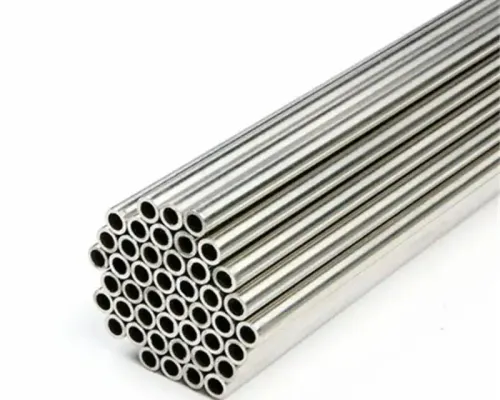
Stainless steel seamless tubes are commonly shipped in strapped bundles or protected individually with end caps, wrapping, or separators. Keep them off dirty racks and away from carbon-steel handling equipment; iron-bearing debris or a carbon-steel sling can leave free iron that later appears as rust staining.
Check these items before releasing the material:
- Compare the tag, packing list, invoice, and purchase order for grade, size, heat number, quantity, standard, and length.
- Request the material test certificate and confirm chemical composition, mechanical results, heat treatment, test results, and traceability to the tube or bundle.
- Inspect for dents, gouges, pitting, unacceptable scale, damaged ends, distortion, and contamination. Do not clean away suspicious marks before recording them.
- Measure outside diameter, wall thickness, length, straightness, and end preparation against the stated tolerances. Sample more heavily when the tubes will be fitted, bent, or pressure-tested.
- Confirm the delivered condition: hot finished or cold worked, annealed or solution annealed, pickled, bright annealed, polished, random length, fixed length, or fabricated.
- Hold material with missing certificates, broken identification, wrong heat numbers, or visible damage. Ask Rajveer Metals to resolve the discrepancy before cutting or installing it.
Do not accept “equivalent” material without the comparison standard, chemistry limits, mechanical requirements, and written approval for your application. This is how stainless steel seamless tubes are supplied and safely accepted.
Related products
 | SS Seamless tubes SS Seamless tubes SS Seamless Tubes are high-quality stainless steel tubes manufactured without any welded joints, providing excellent strength, durability, and... |
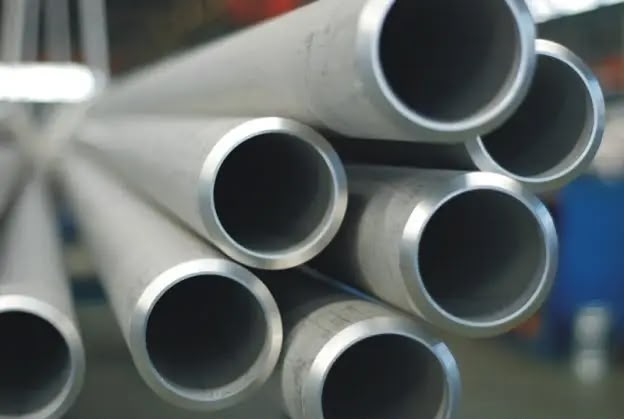 | Stainless Steel Tubes Stainless Steel 304 Seamless pipe Stainless Steel Tubes are durable, corrosion-resistant, and versatile products widely used in various industrial, commercial, and engineering... |
Frequently asked questions
What are SS seamless tubes?
SS seamless tubes are hollow stainless steel products made from solid round billet, without a longitudinal weld joining the walls.
What details should you provide before requesting an SS seamless tube quote?
Provide outside diameter, wall thickness or schedule, length, stainless steel grade, finish, applicable standard, quantity, and required documents.
How do grade, service conditions, and standards determine the right tube?
Choose the grade for corrosion and temperature exposure, then confirm pressure, dimensions, testing, and documentation requirements against the specified standard.
How do seamless and welded tubes compare when buying?
Seamless tubes remove the longitudinal weld from the construction, while welded tubes can offer broader availability, size options, and lower purchase cost for suitable services.
What should you check when an SS seamless tube order arrives?
Check the count, outside diameter, wall thickness, length, surface, end condition, heat or batch markings, packaging, and material test certificate.
Related products
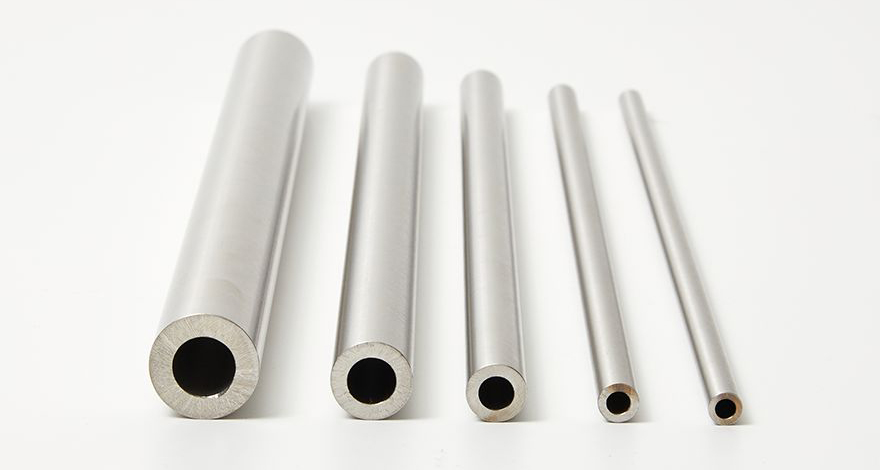 | Stainless Steel Seamless Tube 16mm stainless steel tube 316 We are stockiest & Suppliers of SS Tube 16mm OD from Mumbai, India. |
 | Stainless Steel Seamless Tube 6mm Stainless steel seamless tube We offer high-quality 6mm Stainless Steel Seamless Tubes in Grade 304 and Grade 316, designed to deliver excellent corrosion resistance, durability,... |
 | Stainless Steel Seamless Tube Stainless steel small diameter tubes SS Small Diameter Tubes Precision. Quality. Performance. We specialize in stainless steel (SS) small diameter tubes engineered to meet the demanding... |
 | Stainless Steel Seamless Tube 8mm Stainless steel seamless tube We are a trusted supplier of 8mm Stainless Steel Seamless Tubes in premium grades SS 304, SS 316 and SS 316L, designed to meet the demanding... |