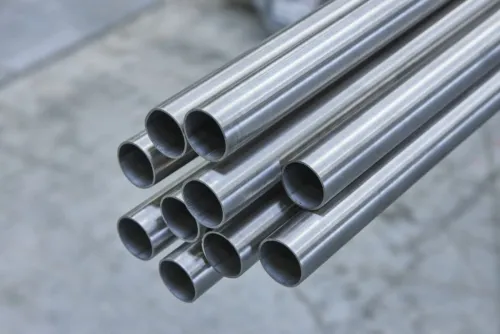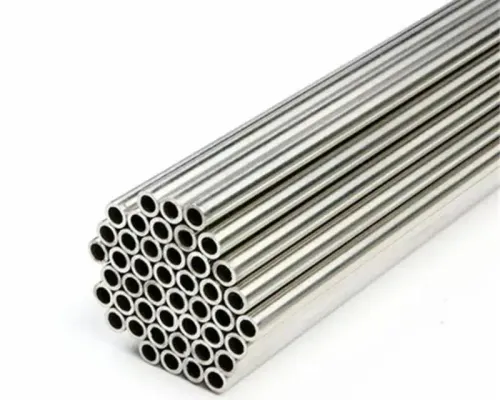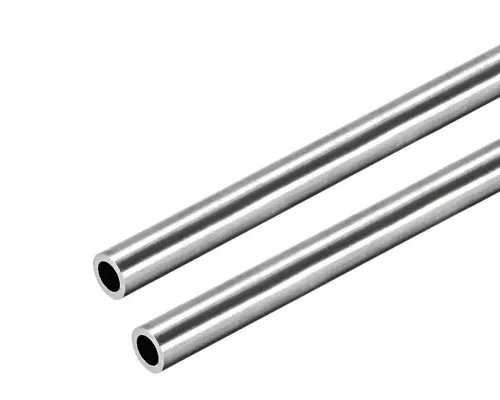

The wrong tube order can create a mismatch in pressure rating, dimensions, grade, documentation, or delivery condition even when the quotation says “316 seamless.” You will be able to define the service, select a comparable specification, evaluate 304 versus 316L, and issue a Chennai-ready request for quotation with traceable inspection documents.
Key takeaways
- Define pressure, temperature, corrosion, cleanliness, and cycling before choosing seamless construction.
- State outside diameter and wall thickness, not only a nominal pipe size.
- Select 304, 316, or 316L from the actual chemical and thermal exposure.
- Put the material standard, tests, certificates, and delivery date into the RFQ.
Match the tube to the service, not just the word seamless
SS seamless tubes are used in instrumentation lines, hydraulic systems, high-pressure process lines, chemical-process equipment, heat exchangers, boilers, superheaters, food and pharmaceutical equipment, oil-and-gas service, and structural or fabrication work. Their construction justifies selection when internal pressure, elevated temperature, corrosion, repeated thermal cycling, cleanliness, or tight dimensional control makes the weld zone a concern.
1. Seamless construction removes the longitudinal weld and its weld-zone variables. It does not guarantee defect-free material or universal superiority. For a practical SS seamless tubes guide, compare the grade, heat treatment, wall uniformity, surface finish, straightness, cleanliness, and inspection scope alongside the manufacturing route.
2. Match the tube to the service condition. Food and pharmaceutical lines need defined cleanliness, surface finish, and cleaning requirements; chloride service needs concentration, temperature, crevices, deposits, and dead legs; pressure service needs design pressure, temperature, test requirements, and failure consequences. “Industrial use” is not a specification.
3. Choose welded tube when the line carries lower-pressure utilities, the assembly is fabricated from standard sizes, the service is noncritical, availability matters, or the specification permits a lower-cost option. Compare delivered wall tolerance, ovality, straightness, finish, heat treatment, testing, and documentation rather than treating seamless as automatically better.
4. Before asking what are SS seamless tubes used for, write the actual duty and request inspection evidence that matches it. A seamless tube with poor wall control or unsuitable cleanliness can perform worse than a properly specified welded tube.
Specify the dimensions as a tube, not as a pipe
A 16 mm outside diameter is not interchangeable with a nominal pipe size. Tube is commonly ordered by actual outside diameter (OD) and wall thickness; pipe is commonly ordered by nominal pipe size (NPS) and schedule.
The stainless steel seamless tubes explained here require a purchase order that states:
- Actual OD or nominal bore; wall thickness or schedule where appropriate
- Length and length tolerance
- Grade, product form, temper, manufacturing route, and annealed or solution-treated condition
- End finish, surface finish, straightness, ovality, and dimensional tolerance
- Whether each dimension is nominal or minimum, plus inspection and certificate requirements
| Tube description | Approximate ID before tolerance | Purchasing consequence |
|---|---|---|
| 16 mm OD × 1 mm wall | 14 mm | Different flow area and mass |
| 16 mm OD × 2 mm wall | 12 mm | Different pressure capacity and fit |
Both are stainless tube, but they are different purchases. The ID calculation is OD minus twice the wall thickness, so catalogue dimensions alone do not confirm what arrives.
Ask whether the quoted OD and wall are nominal or minimum, then compare delivered wall thickness against the order and certificate.
A supplier quoting 16 mm OD × 1 mm wall against a request for 16 mm OD × 2 mm wall has not offered an equivalent product, even if the grade and seamless manufacturing route match.
Choose 304, 316, or 316L against the exposure
304 or 304L suits many general-purpose services; choose 316 or 316L when chlorides, coastal exposure, or welded joints make localized corrosion the greater risk. This stainless steel seamless tubes explained approach starts with the exposure, not the catalogue grade.
| Grade | Strength | Choose it when |
|---|---|---|
| 304/304L | Economical austenitic grade | Chlorides are controlled and service is not highly corrosive |
| 316/316L | Molybdenum improves resistance to localized chloride attack | Seawater influence, salt-laden air, deposits, or chloride cleaners are present |
| Duplex | Higher-alloy ferritic/austenitic structure | A design review supports it; specify ASTM A789/A789M tubing or ASTM A790/A790M pipe, solution annealing, ferrite balance, and required corrosion tests |
Neither 304 nor 316 is immune to pitting or crevice corrosion. Give the supplier the chloride concentration, operating temperature, seawater or coastal exposure, stagnant sections, deposits, dead legs, cleaning chemicals, and contact with dissimilar metals.
Select 304L or 316L for welded joints and heat-affected zones. Their lower carbon content reduces sensitization and intergranular-corrosion risk after welding; 316L is not automatically immune to pitting.
In Chennai, keep tubes away from salt-laden air, wet packaging, chloride-bearing cleaners, carbon-steel dust, and grinding debris. These contaminants can stain stainless steel, while wrapping that traps condensation worsens storage damage.
304 is often the economical choice for suitable service. Pay the premium for 316 or 316L when chloride exposure or welding requirements justify it. Confirm drainability, crevice geometry, surface condition, and cleaning or passivation needs before approving the grade.
Put the correct standard and inspection scope on the RFQ
The standard must match the equipment duty, not merely the stainless grade. Use this ss seamless tubes guide when preparing the RFQ:
| Standard | Covers | Do not substitute blindly |
|---|---|---|
| ASTM A213/A213M | Seamless ferritic and austenitic alloy-steel boiler, superheater, and heat-exchanger tubes | A269 where the equipment specification calls for A213 |
| ASTM A269/A269M | Seamless and welded austenitic tubing for general corrosion-resisting, low- or high-temperature service | For every boiler or high-pressure application |
| ASTM A312/A312M | Seamless, welded, and heavily cold-worked austenitic stainless steel pipe | As automatic instrumentation tubing |
| EN 10216-5 | Seamless stainless-steel tubes for pressure service under the specified European standard | Where the project requires an ASTM standard |
A312 pipe is not automatically suitable for instrumentation tubing because pipe dimensions, tolerances, surface requirements, and end details may not match instrument fittings. A269 does not establish the boiler, heat-exchanger, or high-pressure qualification that A213 or a project-specific pressure standard requires.
State each RFQ requirement explicitly:
- Exact standard revision, grade, product form, dimensions, length tolerance, heat treatment, surface condition, and end condition
- Hydrostatic test, eddy-current or ultrasonic examination, visual and dimensional inspection, and positive material identification for critical service
- EN 10204 Type 3.1 certificate with heat number, chemistry, mechanical results, heat treatment, dimensions, standard, and test results
Match the certificate’s heat number to the tube markings and packing list. A generic certificate without that traceability does not prove that the quoted tubes are the tested material.
Compare Chennai quotations by equivalence, traceability, and delivery risk
Buy SS seamless tubes in Chennai by comparing equivalent specifications, not the lowest line total. Ask every supplier to quote against this RFQ checklist:
- Grade and product form
- ASTM or EN standard and revision
- Actual OD, wall thickness, and ID if needed
- Length and length tolerance
- Quantity
- Annealing or solution treatment
- Surface finish and ends
- Inspection and pressure-test scope
- Certificate type
- Tube marking and packaging
- Required delivery date
Ask suppliers to identify each heat number on the tubes and packing list. Reject a generic certificate that cannot be traced to the supplied tubes.
| Comparison point | Seamless quotation | Welded quotation |
|---|---|---|
| Dimensions | Wall-thickness tolerance, ovality, straightness, length tolerance | Same checks, plus weld-zone dimensional effects |
| Surface | Finish and cleanliness | Finish, cleanliness, and weld or seam examination |
| Testing | Pressure test, NDT, and inspection scope | Pressure test, weld or seam examination, NDT, and inspection scope |
| Evidence | Heat-traceable certificate and markings | Heat-traceable certificate, markings, and weld documentation where specified |
Do not compare only grade and OD; a cheaper offer can carry a thinner delivered wall or narrower test scope. Keep Chennai deliveries off the floor in a dry, ventilated area, away from carbon-steel racks, grinding work, salt, chlorides, and wet packaging. Do not let wrapping trap condensation.
Ask Rajveer Metals for a line-by-line quotation and verify its product, standard, certificate, and delivery condition against your RFQ, rather than accepting “316 seamless” as a complete specification.
Related products
 | SS Seamless tubes SS Seamless tubes SS Seamless Tubes are high-quality stainless steel tubes manufactured without any welded joints, providing excellent strength, durability, and... |
 | Stainless Steel Seamless Tube 6mm Stainless steel seamless tube We offer high-quality 6mm Stainless Steel Seamless Tubes in Grade 304 and Grade 316, designed to deliver excellent corrosion resistance, durability,... |
Frequently asked questions
What are SS seamless tubes used for?
They serve instrumentation, hydraulic, high-pressure process, chemical, heat-exchanger, boiler, superheater, food, pharmaceutical, oil-and-gas, and fabrication applications.
How do you specify SS seamless tubes as tubes rather than pipes?
Give the outside diameter and wall thickness, along with length, tolerance, finish, end condition, and quantity. Do not rely on a nominal pipe size alone.
How do you choose 304, 316, or 316L stainless steel tube?
Compare the service exposure: 304 suits many general environments, while 316 adds molybdenum for stronger chloride resistance. Choose 316L when low carbon is needed for welded assemblies and reduced sensitisation risk.
What should an RFQ for seamless tubes include?
Name the material and product standard, dimensions, heat-treatment requirement, tests, inspection level, certificates, marking, packing, quantity, and required delivery date.
Related products
 | Stainless Steel Seamless Tube 16mm stainless steel tube 316 We are stockiest & Suppliers of SS Tube 16mm OD from Mumbai, India. |
 | Stainless Steel Tubes Stainless Steel 304 Seamless pipe Stainless Steel Tubes are durable, corrosion-resistant, and versatile products widely used in various industrial, commercial, and engineering... |
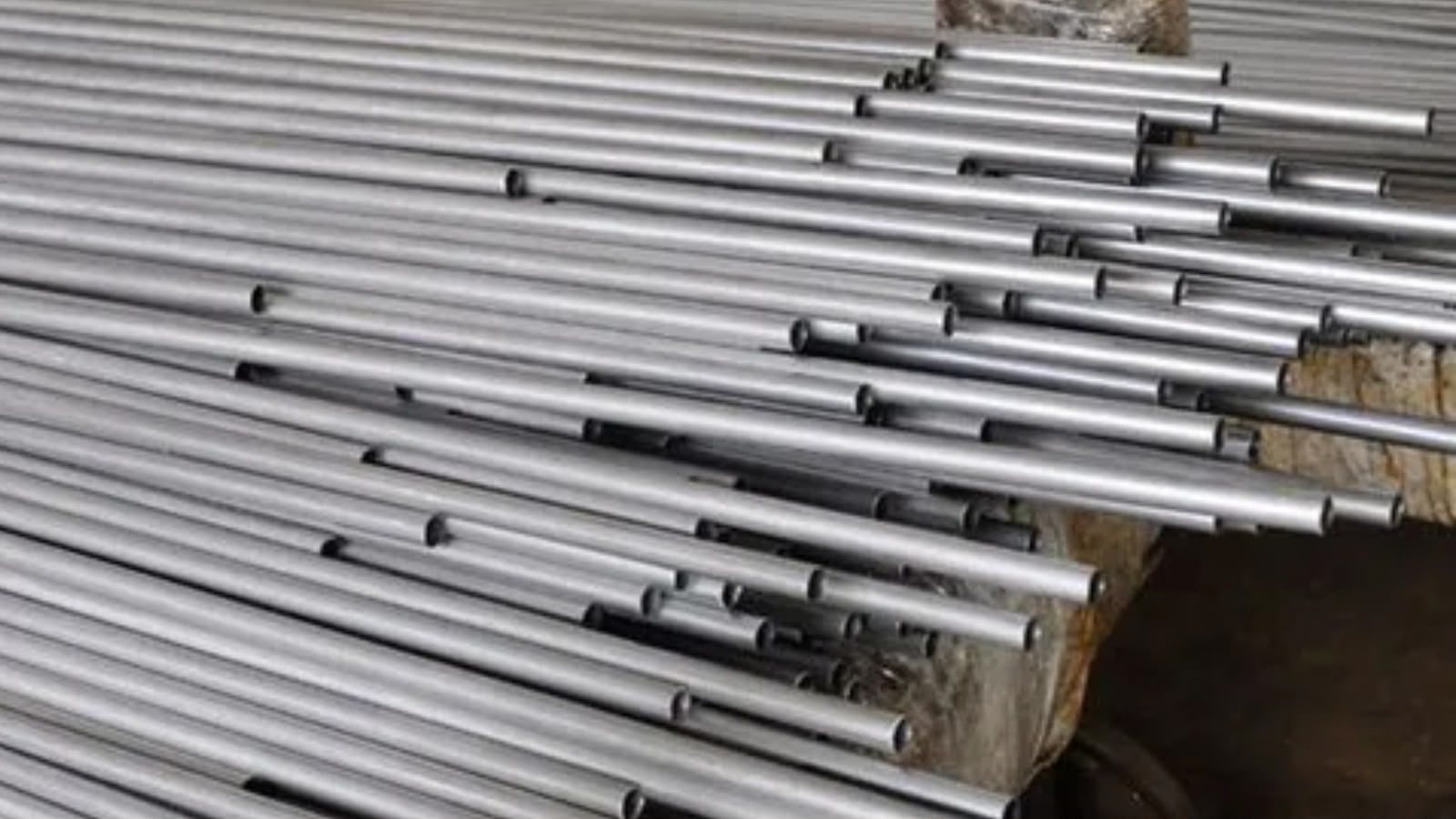 | Stainless Steel Seamless Tube 6.35mm Stainless steel seamless tube 6.35 mm SS Seamless Tubes – All Grades Premium Quality Stainless Steel Seamless Tubes in 6.35 mm Size We are a reliable supplier of 6.35 mm Stainless... |
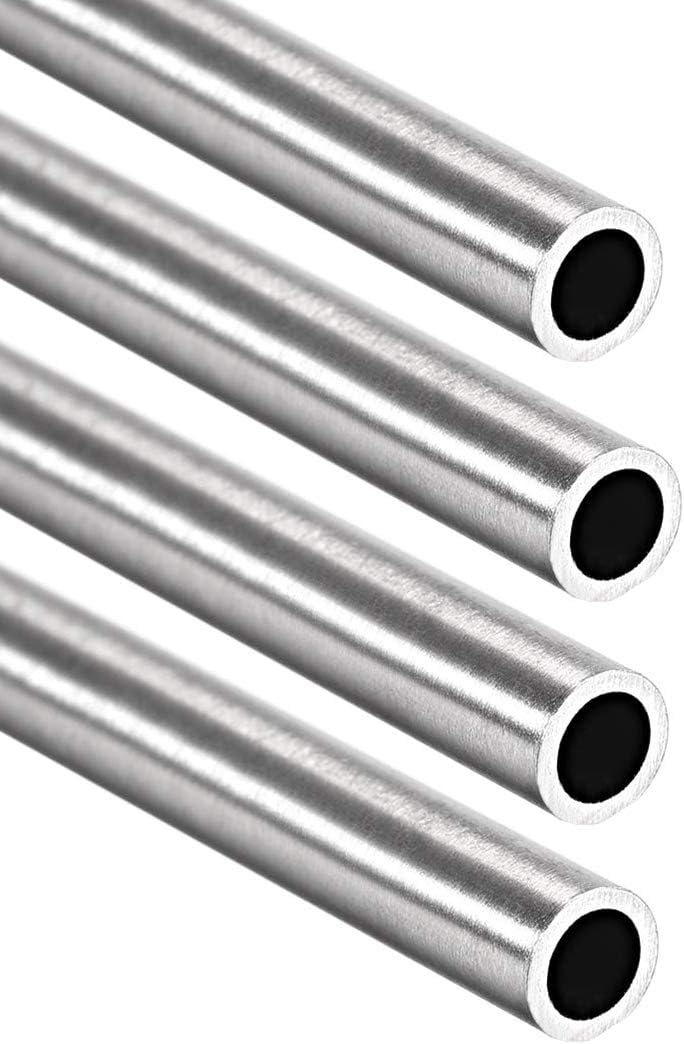 | Stainless Steel Seamless Tube 8mm Stainless steel seamless tube We are a trusted supplier of 8mm Stainless Steel Seamless Tubes in premium grades SS 304, SS 316 and SS 316L, designed to meet the demanding... |